12.03.26
Since announcing their first space in Dundee in July last year, charity Outerspaces rapidly filled their temporary studio space with creative practitioners, recent graduates, small businesses and collectives; all in need of space to make work. Located in the former TJ Hughes department store in the Wellgate Centre, the unit had been vacant since 2020 when the store did not reopen after the first Covid-19 lockdown.
Outerspaces is one of several charities which negotiates with the landlords of vacant units to provide free space for artists, responding to the need for affordable studio space and the increasing number of vacant spaces in towns and cities across Scotland. Organisations like EP Spaces and Hypha Studios are also using this approach and it is fast becoming the dominant model in Scotland. So, are temporary spaces the solution to both the desperate lack of creative space and the regeneration of our city centres, or just one of few options available to creative practitioners in need of long-term and secure creative spaces?
There is no doubt that temporary spaces offer a practical and affordable solution for short-term projects and emerging creative practitioners, providing a flexible option to those not ready to commit to a long-term space. They bring together a diverse mix of disciplines and offer exciting opportunities for experimentation and new collaborations. These models also tap into a strong interest from local authorities, landlords and the property sector in alternative uses for vacant units due to the decline of retail, and an appetite from communities for more community spaces and cultural activities in city centres.
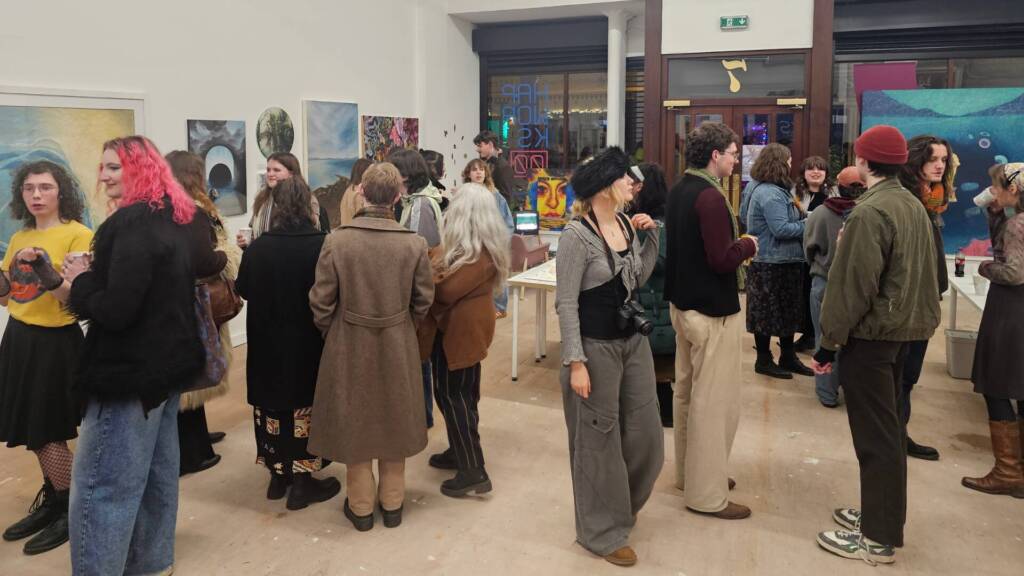
Creative Dundee’s temporary pilot space, Hapworks_00, occupied a vacant retail unit at 7 Castle St in the city centre, in partnership with Dundee City Council. It gave us the opportunity to experiment, make creative work visible and develop ideas for a long-term space with the creative community. However, as we came to learn firsthand, temporary space has many limitations. It comes with unexpected responsibilities and risks, and often limits creative communities’ ability to invest in their spaces, practices and network.
The most obvious downside of temporary space models is the unknown lease length, with space typically offered on rolling 30-day contracts, leading to an understandable reluctance from either temporary space providers or the tenants to invest in improving the spaces. This means that spaces are not always fit for purpose. They often don’t have services such as wifi and aren’t adapted for accessibility and security, limiting who can use them and requiring tenants to trust one another with their work and property. Without staff onsite, many of these spaces rely on the community of artists to self-organise around maintenance of the space, implementing safety procedures, and covering heating and energy costs.
This work is all unpaid with the community themselves taking on responsibilities and liability. When a new commercial tenant is found for the space, the work of moving out, identifying a new space, and establishing these systems begins again and repeats indefinitely. These issues have been explored extensively with artists and creative practitioners through the More Than Meanwhile project whose manifestos highlight the concerns around temporary spaces and the amount of unpaid work required by creative communities to set up and run them.
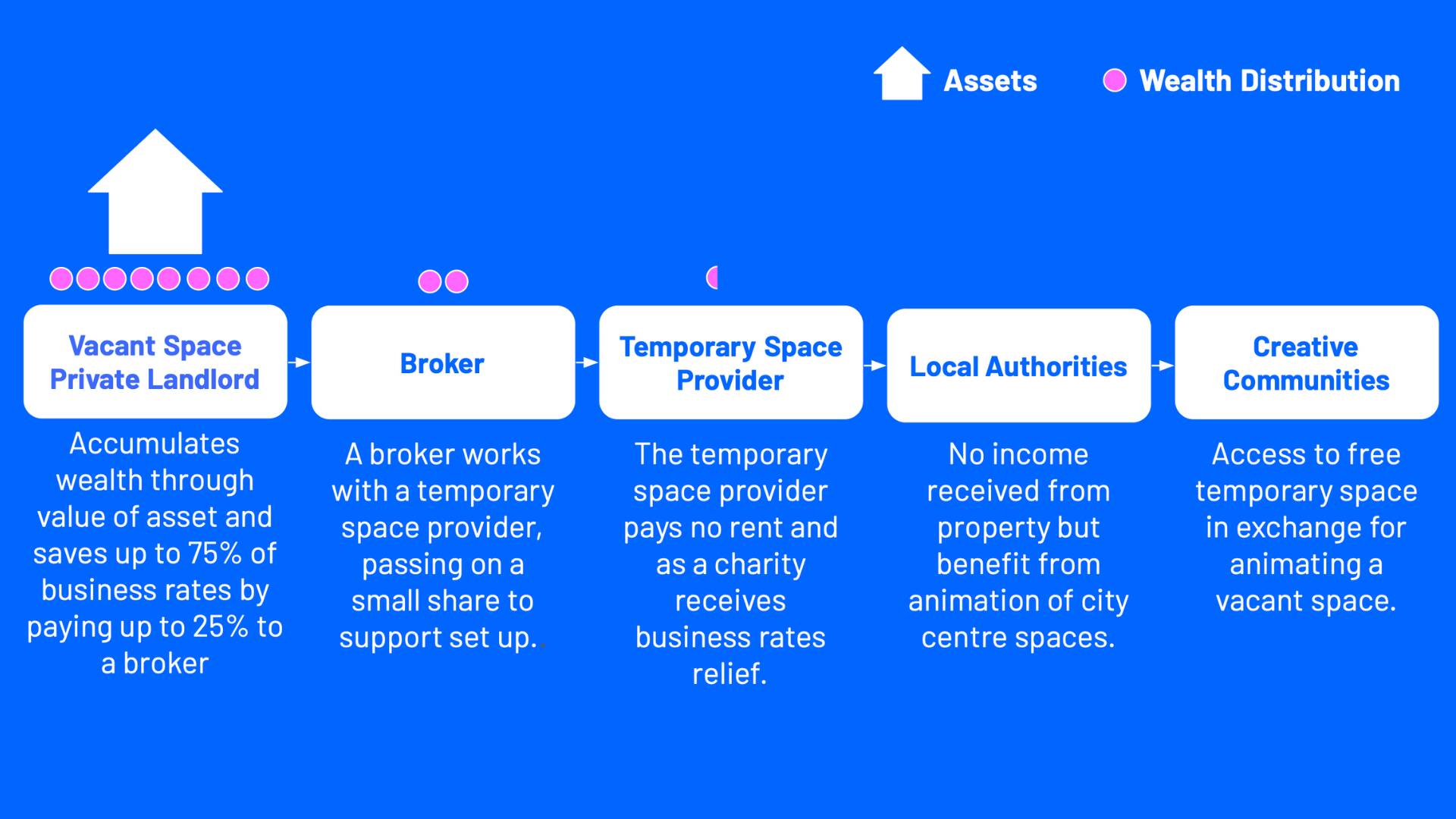
In addition to this, the model predominantly benefits private landlords. Allowing them to retain their assets, accumulate wealth from them, and avoid non-domestic business rates (a tax on commercial properties) – all without the commitment of a long-term lease. Hammond Associates act as the property broker for all the temporary space providers mentioned in Scotland. According to Hammond Associates, landlords are able to save up to 75% of the business rates payable on their vacant property with up to 25% paid to the property broker. The temporary space providers may receive a small portion to support their charitable activity, and the creative community receive only access to the space. As a charity, the temporary space provider is eligible for tax relief, which makes the space more affordable but also results in little or no business rates paid to Local Authorities and the Scottish Government.
The diagram below aims to simply demonstrate the top down nature of the temporary space model and where wealth and assets are held.
Artists and creative practitioners might benefit from temporary access to space, but during their tenancy landlords are permitted to continue to market the property. By being in the space, the creative community increases visibility, footfall and overall market appeal of the space, ultimately helping landlords to attract the long-term tenant who will displace them.
Perhaps this is the price paid for free or low rent space. The pattern of creative communities making neighbourhoods, streets and spaces desirable only to be turfed out for businesses able to pay higher rates is not new, but the way this has been accepted and is becoming structural is concerning. While temporary space provision definitely has a role to play in the ecosystem of what creative spaces are needed, this alone will not provide the long-term security and space creative communities require, and a reliance on this model is increasingly problematic. Indeed, even long-term space suffers without development funding and coherent strategy, as we can see unfolding in Glasgow.
With the passing of the Community Wealth Building (Scotland) Bill in the Scottish Parliament last month, now is a key time to consider who temporary space models benefit and what other options are needed. How can we create the pathways from temporary to long-term space that enable creative practitioners to develop their practice, businesses to grow and communities to evolve? What other models are needed to unlock long-term, sustainable space? And how can we enable creative communities to own assets in a way that breaks continuing cycles of instability and builds community wealth?
Creative communities by nature already contribute meaningfully to Community Wealth Building strategies and have the potential to lead the way in Scotland. But to continue doing this work and realising its potential they need support from place partners, private landlords, and the wider property sector to access long-term space.
Temporary space activates vacant buildings, offers valuable flexibility for creative practitioners, and builds new, mixed-practice networks – but without longer-term pathways, it cannot build stability or wealth for local communities. We now need a clear transition from meanwhile-use to secure, incremental and ultimately permanent creative infrastructure.
Thank you to those who joined us for Meanwhile Space Ecologies; a workshop and panel discussion on Thu 19 March where we discussed the benefits and challenges of Dundee’s temporary and short-term space infrastructure in collaboration with researchers from Newcastle University. We’ll be sharing more from this continuing research in the coming months.

If you would like to support us in creating even better content, please consider joining or supporting our Amps Community.