30.06.26
As part of the latest phase of our creative space work through our AHRC Creative Communities project in partnership with The University of Dundee, we collaborated with third year Digital Interaction Design and Graphic Design students to explore the city’s creative infrastructure; aiming to document where Dundee’s creative communities find inspiration, make work, collaborate, gather and share their work, and consider what other spaces are needed.
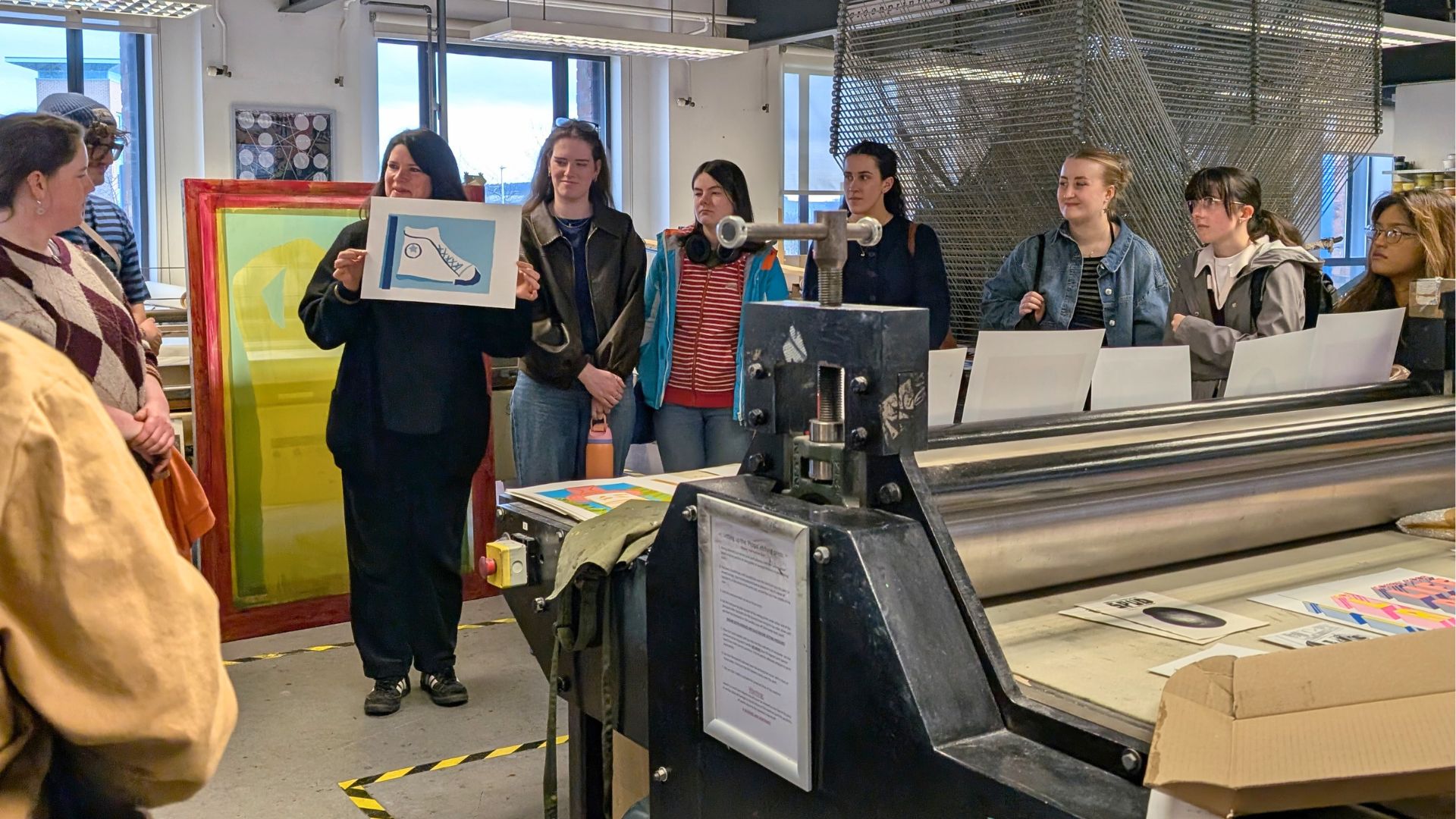
The project began by collectively mapping the spaces the students already interacted with in the city before getting out and exploring spaces across the city. Together we visited Generator Projects, Biome Collective and Agency of None at Hapworks_Studios, DCA Print Studio and artist Leyla Hussain at Jupiter+ Legacy space at 7 Castle Street.
Over the next four weeks, the students worked in seven multi-disciplinary groups to develop a map, visual identity and participatory campaign. The creative outputs aimed to make creative work happening in Dundee more visible, help us advocate for more dedicated creative space and demonstrate the contribution of creative communities to the city.
Each group took their own unique approach, understood Creative Dundee’s community-led ethos as the “client”, and showcased inspiring ways to involve people in discovering, documenting and advocating for creative space.
It was brilliant to involve students in this work, get their perspective on the ways they already interact with creative infrastructure in Dundee, introduce them to new spaces, and hear about the creative spaces they would like to see in the future that would support them to stay in the city when they graduate. Find out more about a few of the projects below.
Rachel MacLean, Mati Rogulski, Quintana Beattie, Finn Wallace,
Elizabeth Fleming and Harris Grieve
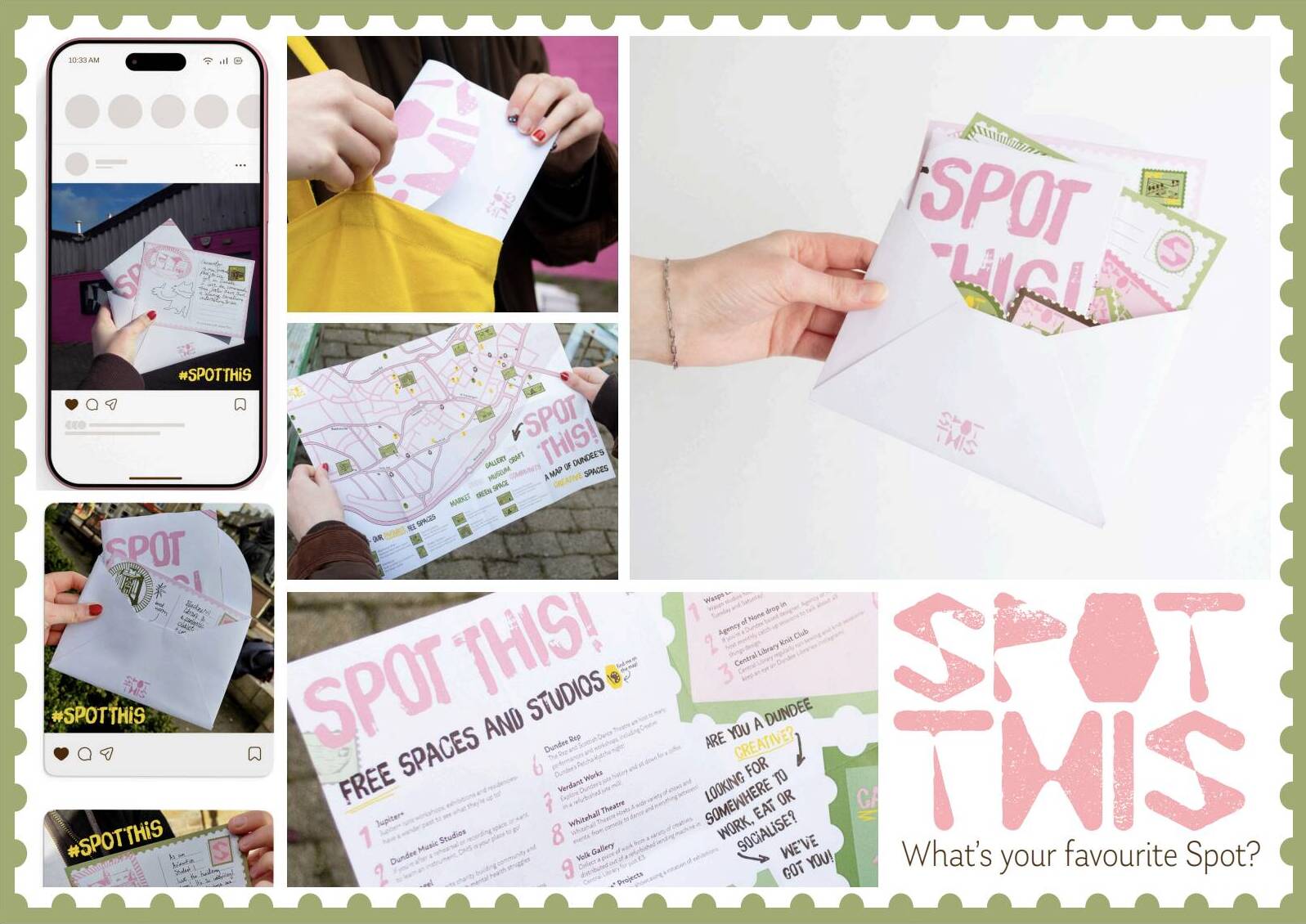
We wanted to focus on free/affordable spaces for creative individuals who are currently in education or a recent graduate. We mainly focused on Libraries, and spaces specific to Dundee, such as the McManus Galleries, V&A Dundee, Scrap Antics, and many more. Our focus was to highlight the spaces already existing while showing what non-conventional creative spaces may offer.
Through extensive research we discovered that there are many places out there that run workshops, or offer a creative space for people to learn new skills or work on current projects. These spaces offered free/affordable materials or classes for young people of varying ages. We felt it was important to highlight this as some individuals from the group are from Dundee and were unaware of the opportunities out there.
We would love to see more inclusive and affordable spaces for people. Places that are beginner friendly, and welcoming; as well as places for those who already have experience within the field but would like to learn more. It would also be nice to see spaces where ‘drop-ins’ are available and you can seek support with projects you are working on, and/or have peer-reviews to help improve your work, and get appropriate feedback.
The spaces we found were very interesting. Some of us were unaware that Blackness Library and Central Library both have “Create Spaces”, and offer workshops. It was interesting to see what is out there, and the missed opportunities due to a lack of awareness.
Megan Kidd, Susanna Tweedie, Rebecca Hutchison, Josefina Navarro, Joe Obyrne
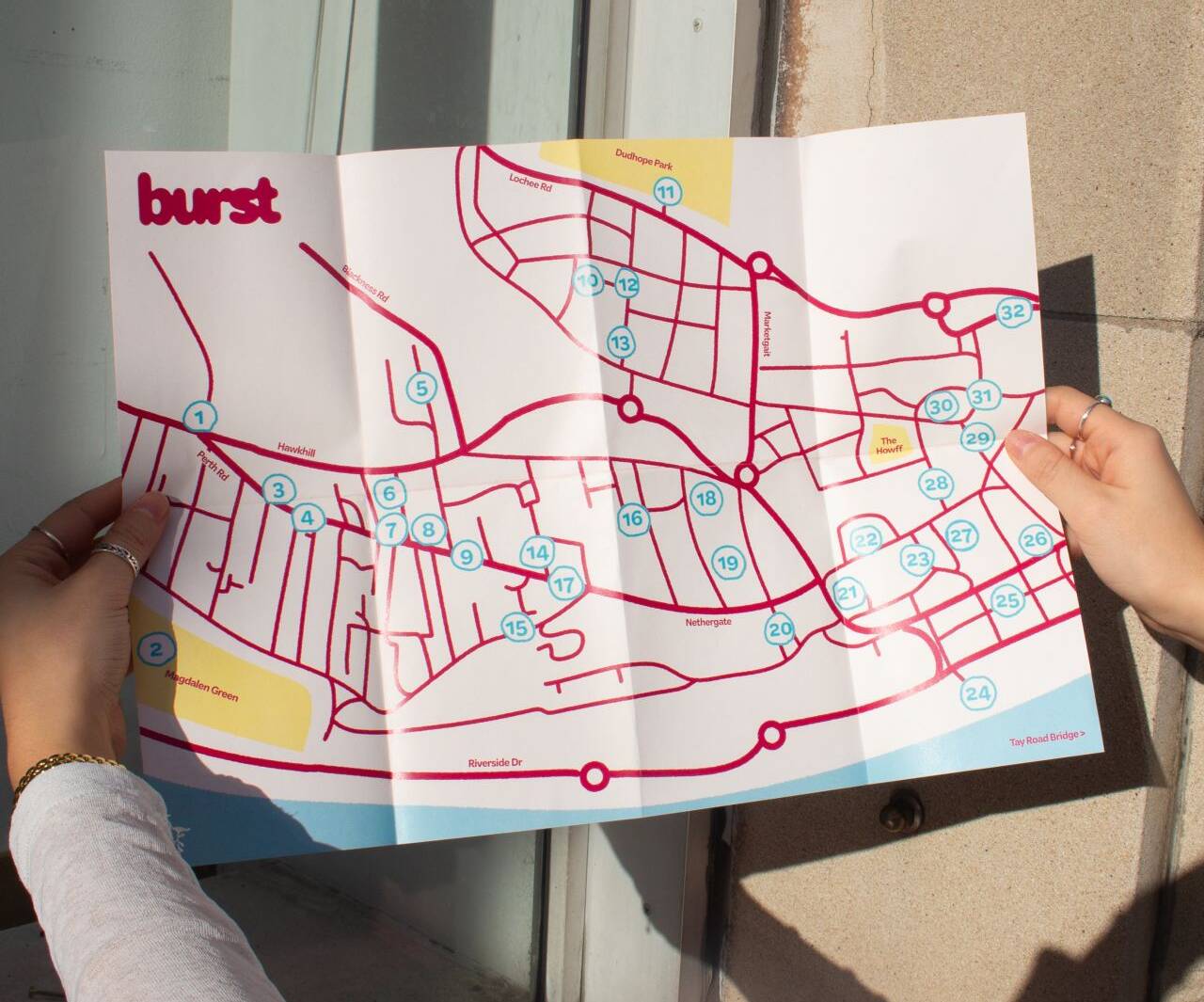
Burst was inspired by the idea of ‘creative bubbles’ – the groups we stay in, and how to burst out of them. We created a map of central Dundee, with 3 tailored routes, aimed towards creatives, for productivity, inspiration, and socialisation. We also created a website, which includes the map, route information, and an up-to-date events section. The website links to our interactive campaign, in which folk can add their own pinpoints and share their favourite local spaces to be creative.
We learned that while there are more spaces for creatives in this city than we initially realised, they are short-lived as rent for lots increase, and people move elsewhere for more stable jobs/opportunities.
We would like to see more spaces for new graduates, in order to keep the creative energy within our city, instead of grads moving away. We’d like more studios that can take on new grads, and spaces that allow for more design opportunities and networking. This includes exhibit spaces specifically for design work (such as Grateful Gallery in Glasgow), coffee shops that can also host workshops (RIP Reform st/Dock St Blend) and chill study/studio spaces outside of the university, as that resource is cut off when we graduate.
Through this project, we discovered Outer Spaces – an Edinburgh-based organisation that sets up temporary art spaces across Scotland, including in Dundee’s Wellgate. Outer Spaces began as a response to the pandemic and works by leasing out empty lots to artists for free – a way to cultivate and keep creatives in their city. This is a highly respectable undertaking as opportunities for artists (especially those that are affordable) are becoming harder to find.
Noah Crawford, Claire Snodin, Thomas Gilmore, Lewis Peacock and Mila Todd
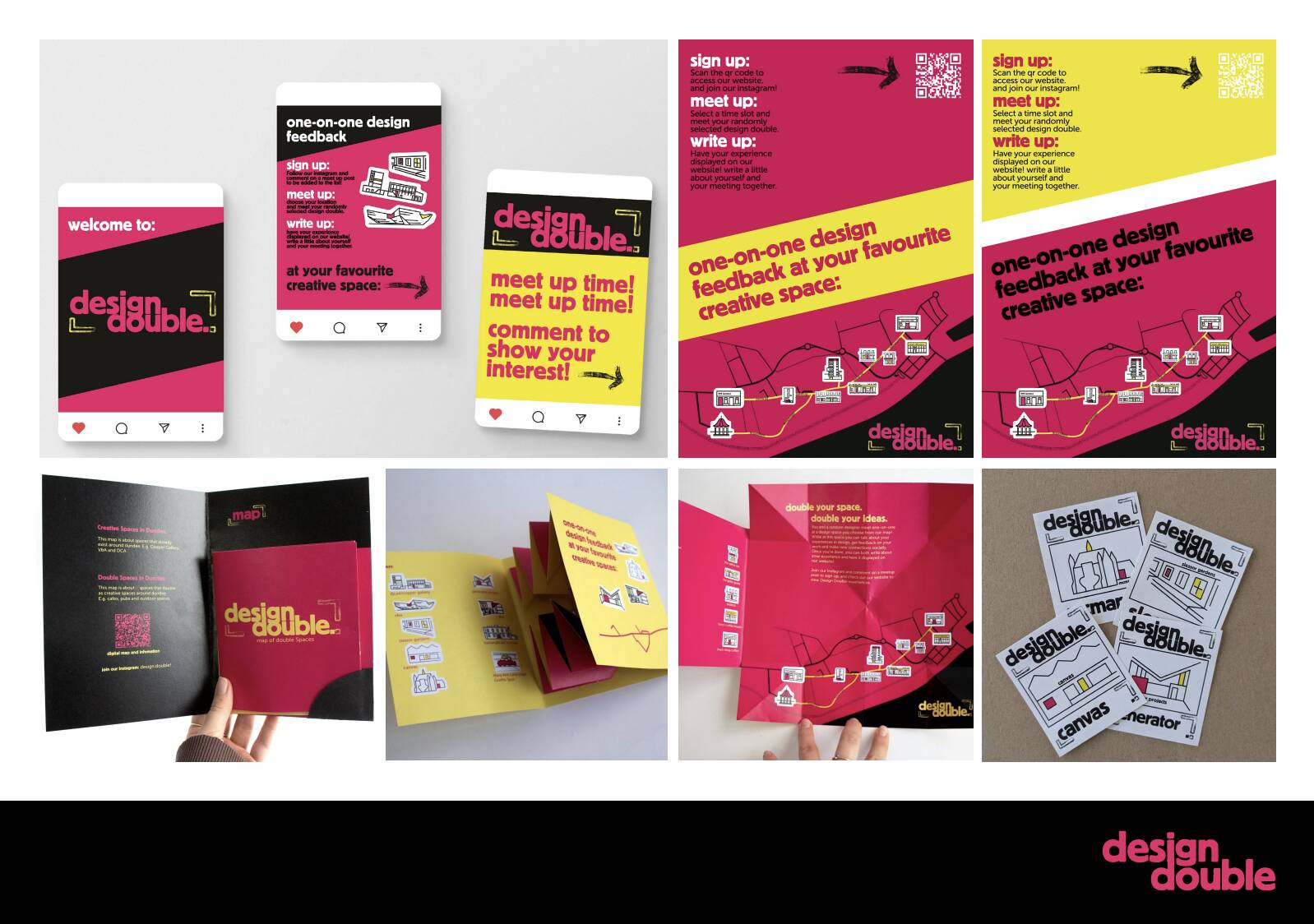
Design Double focuses on the feeling of isolation and lack of feedback opportunities available to the creative community when they graduate from university. We focused on spaces that can act as creative social hubs, such as coffee shops like EH9, galleries, for example, the V&A Dundee, and many more. Highlighting that a number of existing spaces can double as a creative space.
Through our research, we found that Dundee has a strong network of creative workshops and community spaces that support skill development and independent projects. Many of these are low-cost or free, making them widely accessible.
We also learned that once students leave university, they often lose structured opportunities for feedback and collaboration. While alternatives do exist, they’re not always clearly signposted, meaning many people aren’t aware of them.
In the future, we would like to see more accessible and visible creative spaces in Dundee that specifically support collaboration and feedback. This could include open studio environments, drop-in critique sessions, and informal workshops where people at different stages can share work and learn from each other. We’d also like to see more hybrid spaces that combine making with mentoring not just places to create, but places where guidance and conversation are encouraged. Flexible, low-cost spaces that welcome both students and non-students would help create a more connected creative community.
I personally didn’t realise there were as many creative spaces in Dundee, as someone who commutes to university I find these places are rarely talked about and lack sign posting. Myself and others in the group were also unaware of the workshops and tutorials such places offer as well.
Rose Allan, Rory MacRae, Beth Chisholm, Emily McIntosh, and Suzie Sturrock
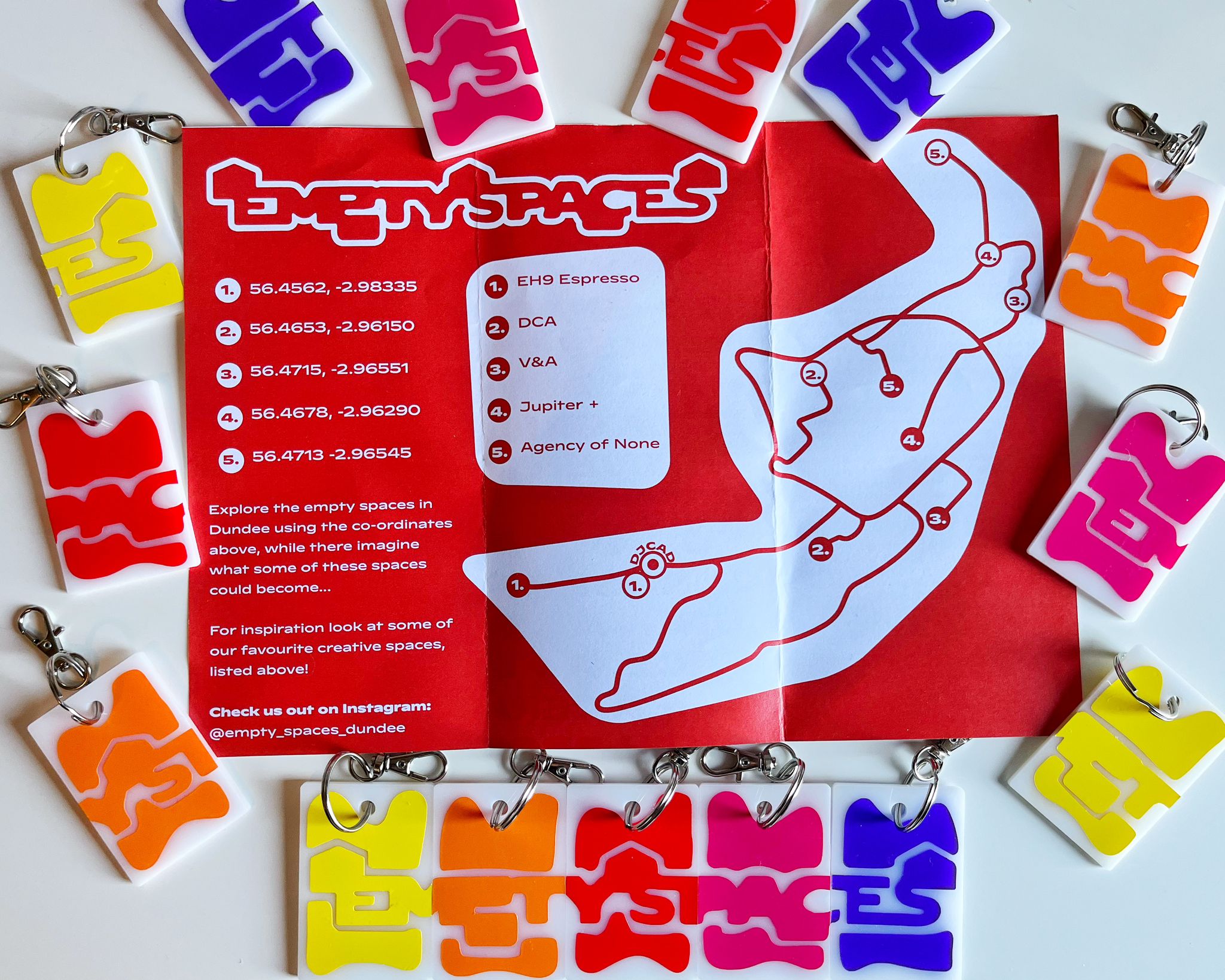
Empty spaces explores creative spaces across Dundee through interactive design, community engagement, and geocaching-inspired exploration and how unused spaces across Dundee can become opportunities for creativity, collaboration, and community. Through geocaching-inspired map design, collectable keychains linked to different locations, card-sorting activities, interviews, and campaign research, we investigated how the lack of creative spaces impacts people in the city.
Our project developed into a social media campaign promoting existing creative spaces while encouraging public involvement in reimagining empty buildings. Key themes we explored included community engagement, accessibility, interactive design, geocaching-inspired exploration, and the role of social media in connecting people through creative opportunities.
Building on our exploration of Empty Spaces in Dundee, we learned that awareness of creative space provision is uneven across the city. People already engaged in Dundee’s creative scene tend to know where these spaces are, while those outside it are often unaware of both existing provision and the scale of opportunity. We also discovered that many vacant or underused buildings could potentially become creative spaces, but real-life barriers such as funding, access, and personal circumstances make this challenging. Overall, the project highlighted a gap between available spaces, public awareness, and their activation.
Looking forward, we would like to see more accessible, affordable, and welcoming creative spaces across Dundee. These spaces should support people from all backgrounds working in art, music, and design, while also being open to those who may simply need a safe and supportive environment to create or connect with others. Accessibility in both location and cost is key, ensuring that creative opportunities are available to everyone, not just a few. We also envision spaces that encourage collaboration, skill-sharing, and community interaction, helping individuals develop their practice and feel supported in their creative journey.
Through our project, we discovered EH9 Espresso in Dundee, an independent specialty coffee shop known for its high-quality coffee and strong community-focused atmosphere. This space also became an important part of our research, where we carried out our card-sorting activity. We asked two employees to take part, sorting cards labelled with different groups such as council members, students, and minimum wage workers, based on who they felt was most to least impacted by the lack of creative spaces in Dundee. This helped us gain insight into perceptions of inequality and awareness around access to creative opportunities in the city.
Thank you to all the student groups who each demonstrated a unique approach to this brief and to DJCAD staff Paul Gault, Helena Gregory and Jamie Stein for their interest in collaborating with us on this project and helping to make it happen.

If you would like to support us in creating even better content, please consider joining or supporting our Amps Community.