21.07.26
We’re delighted to be continuing the Fabric journey – an informal peer-learning programme designed to share, reflect and imagine how collective action can shape a better tomorrow. Bringing together young people, creative practitioners, and youth and health workers, Fabric: Creating Care will explore how creativity, care and systems that currently support young people can be stronger, better shaped and more hopeful in Dundee.
In this blog, Sofía/Teyo Calmeiro-Arguello takes us through the third session, ‘From Experience to Influence’, sharing a day filled with learning, exploration, and collective reflection.
The third day of our Fabric journey started at the DCA. We settled in with teas, coffees and our pick of three printed out sentences curated from words expressed during the previous Fabric days. These sentences would serve as our guide and a starting point for the workshop to come. I selected:
The fragility of the systems currently in place.
With respect, curiosity, vulnerability, and passion.
Community ecosystems where social care is nurtured — what are the parts, structures, conditions and relationships needed for it to flourish?
We started with a wonderful session facilitated by Kate and Caroline from The Scottish Parliament’s Participation and Communities Team, and Sarah from The Scottish Parliament Information Centre (SPICe). They walked us through the Government and Parliament institutions that run our country, the processes in which decisions are made, how the people can interact with these dynamics and the actions we are entitled to when seeking representation in policy. What struck me (not surprisingly) was the inaccessibility of it all.
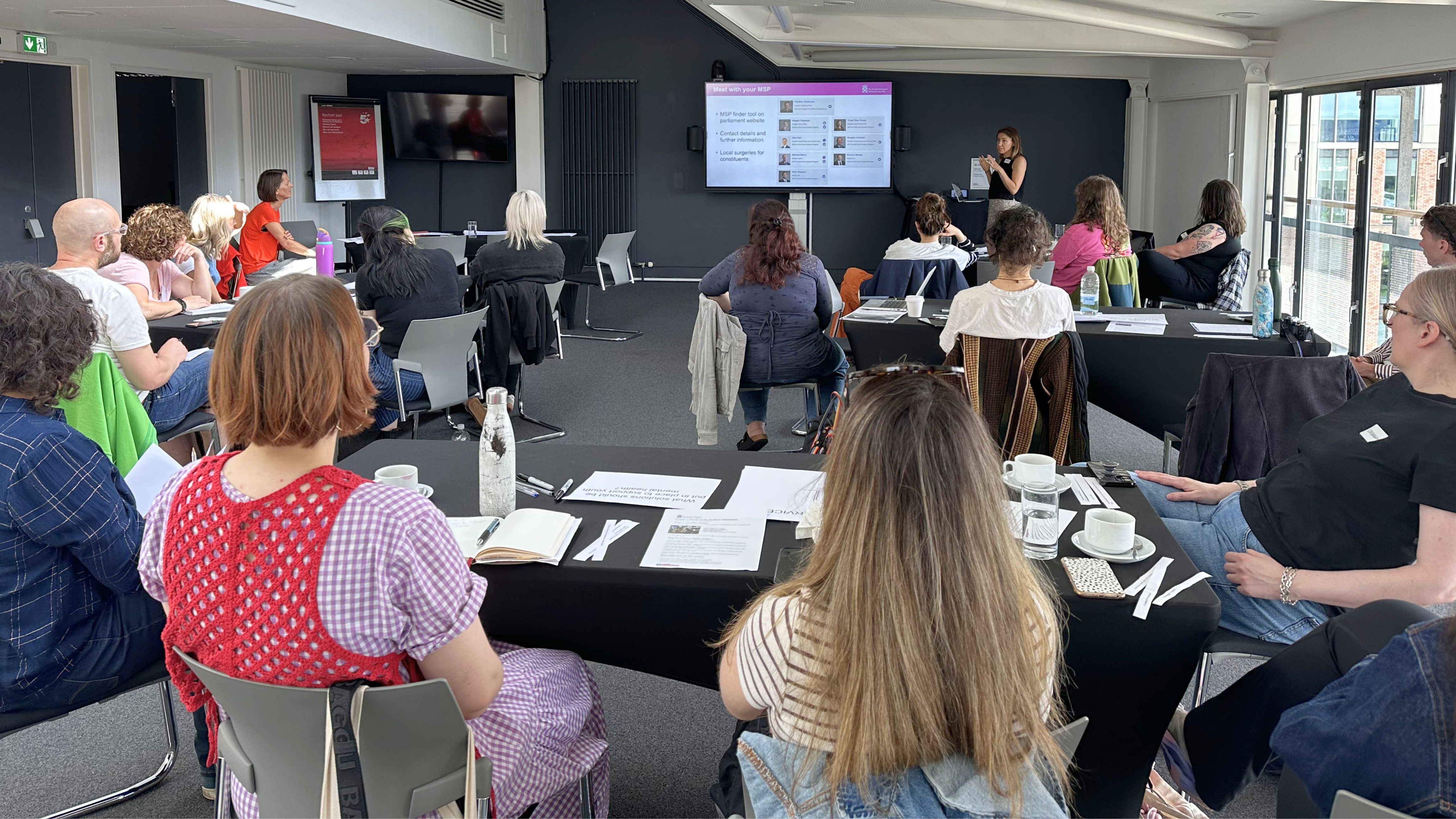
Up until that day, not once had anyone explained to me how the Scottish governing bodies worked, not even at school. Parliament and Government actors are in a world of distant authority, a dynamic that is repeatedly enforced throughout our society. It’s a wall that fills a gap where human interaction and curiosity might be, and on the other side policies are passed that hold contempt for my existence.
I don’t think my experience is unique. In a large, diverse population the language of knowing has not been provided. How are communities who aren’t in the rooms of Parliament expected to engage with shaping society without taking on another heavy burden? More specifically, how are young people – who are rarely met where they are – supposed to get our needs met by systems that only verbally promise to serve us?
What was certain was the passion that Kate, Caroline and Sarah held for their work in addressing the accessibility issues with the development of People’s Panels. Our discussions explored what worked, what needs improvement and the different barriers that impede individuals from participation. It is not lost on me the importance of this opportunity to engage with the team; to follow up with questions, share feedback and insight and be met with curiosity.
Their patience and willingness to engage from a place of learning is part of the human collaborative connection that is missing in decision making. Where our lives are impacted by people who don’t live them. It’s a practice that people give their lives for, often violently so. I wonder how our discussions across the day will shape things moving forward.
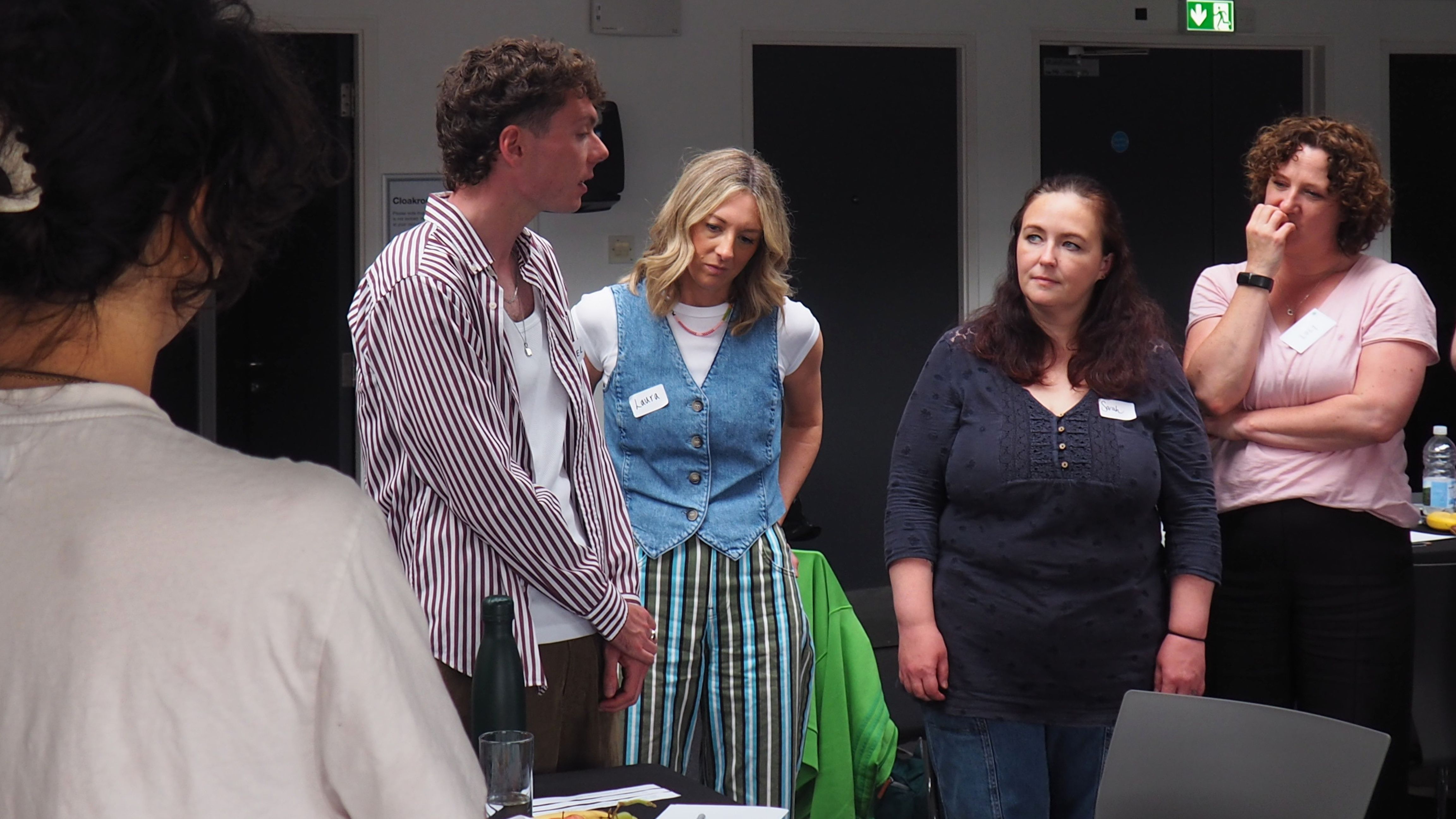
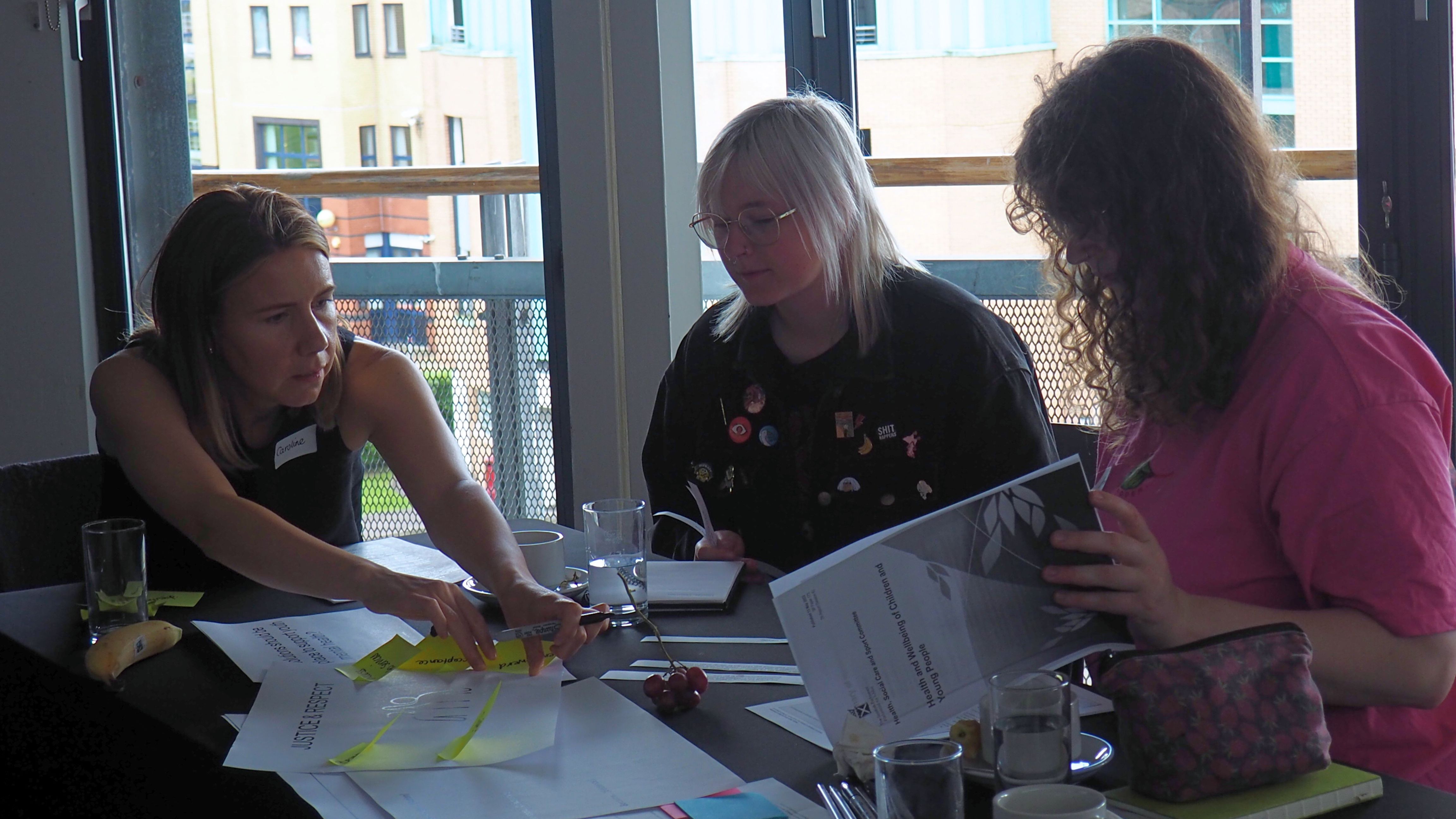
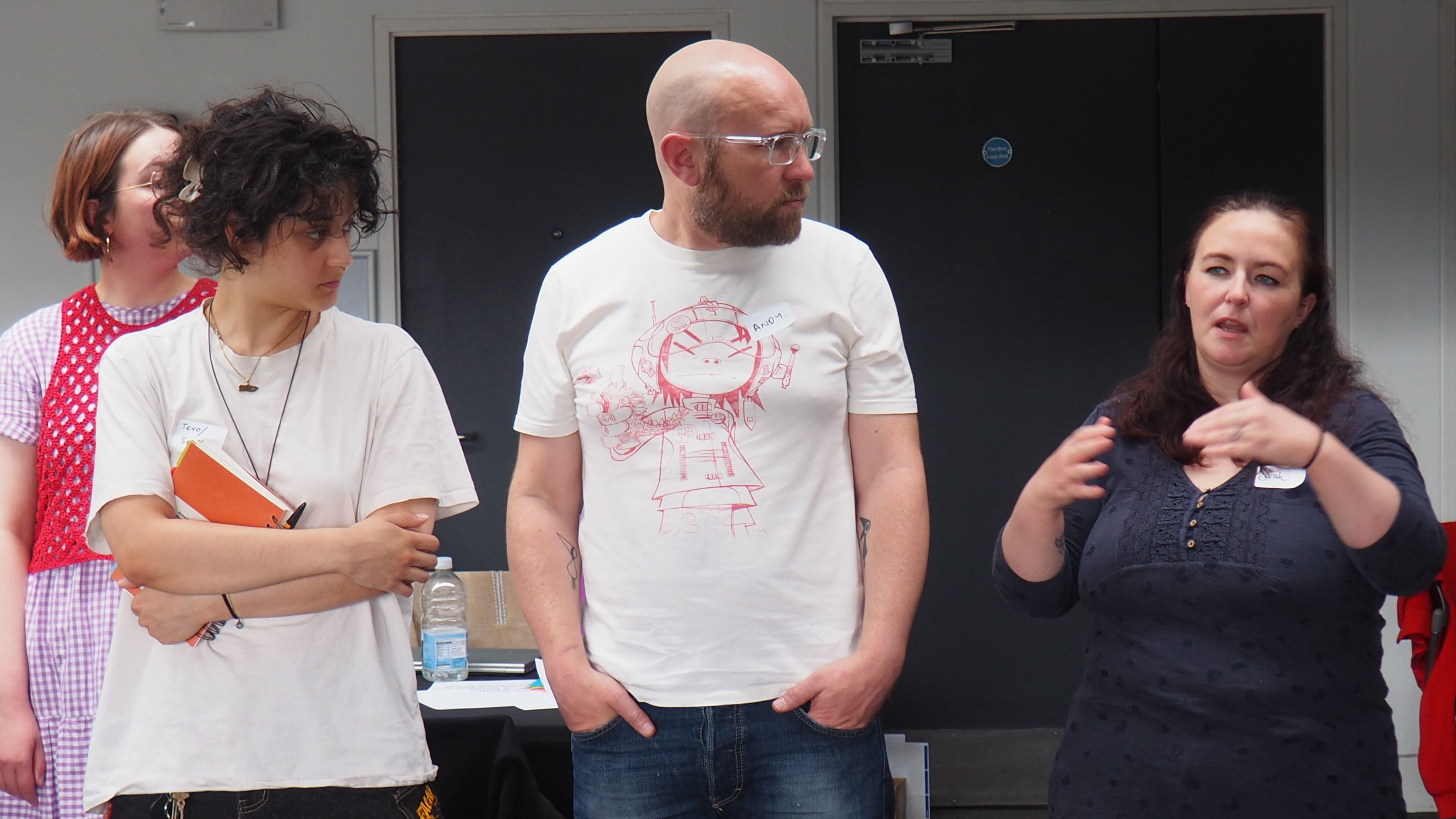
After lunch it was our turn to have a go at drafting our own recommendations for Parliament, each table holding a prompt: Prevention & Education, Access To Services, Joined-Up Care, Justice & Respect, Advocacy (by and for young people).
Our group was exploring ‘Access to Services.’ To land on specific recommendations was challenging. We could have gone on for hours about the real possibilities of why a young person cannot access a service, such as; energy, distance, money, trusted and consistent relationships, discrimination, capacity, time, and the idea of safe adults.
As we chatted issues of systemic discrimination featured heavily. Colonial systems of oppression such as racism, classism and patriarchy are baked into the foundations of health and wellbeing services, and the third sector is no exception either. Statements of inclusion and proximity to ‘diversity’ veil the lack of necessary anti-oppression work required to challenge these systems.
Currently, care is built on exclusionary models; rooted in a decision of who is human enough to receive dignity, then justified by scarcity created by policy choices. Service users and providers who are on the margins are extracted from and pushed out. When funding is cut, everyone suffers and those with lived experience are axed first because they are valued less.
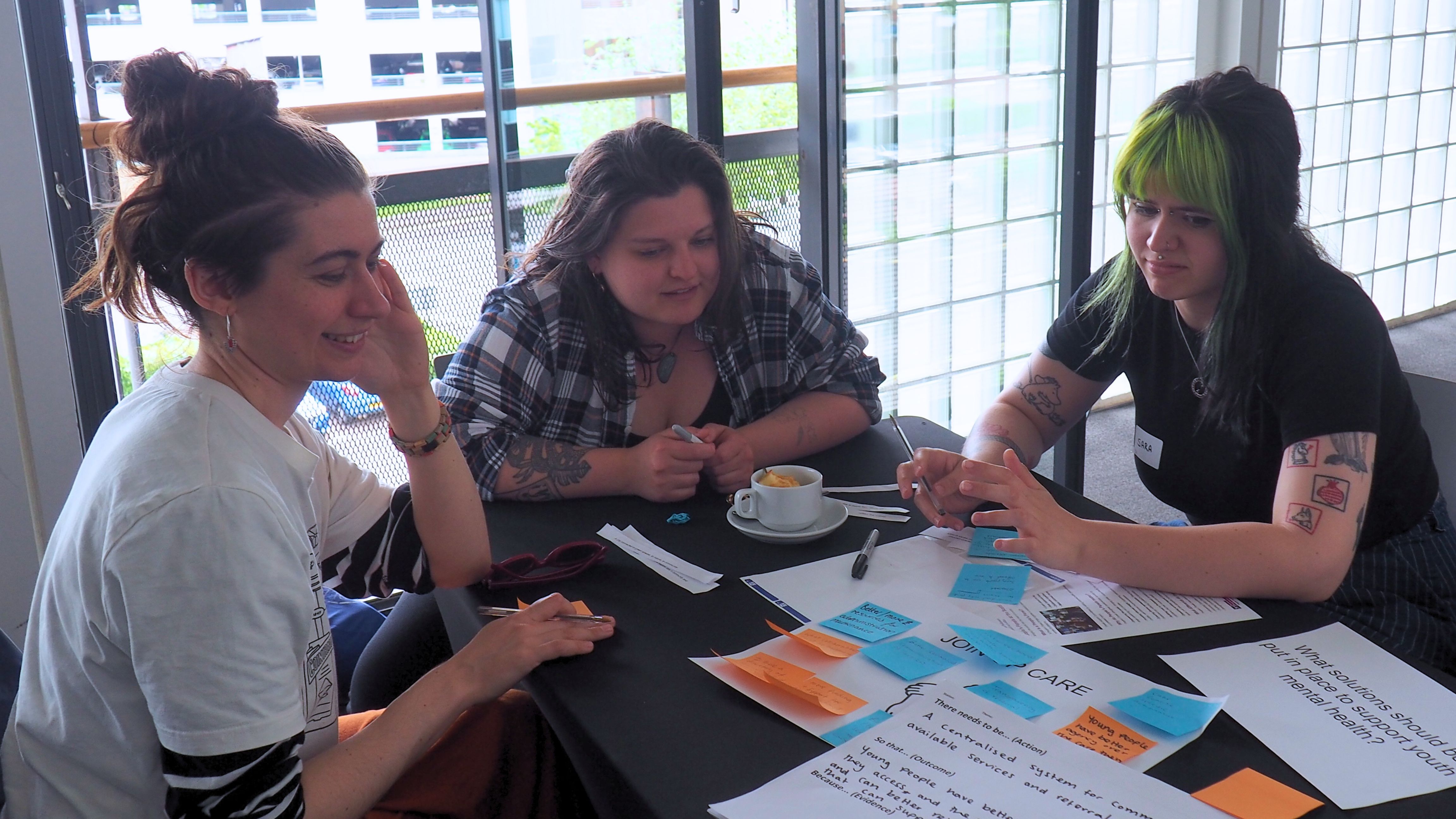
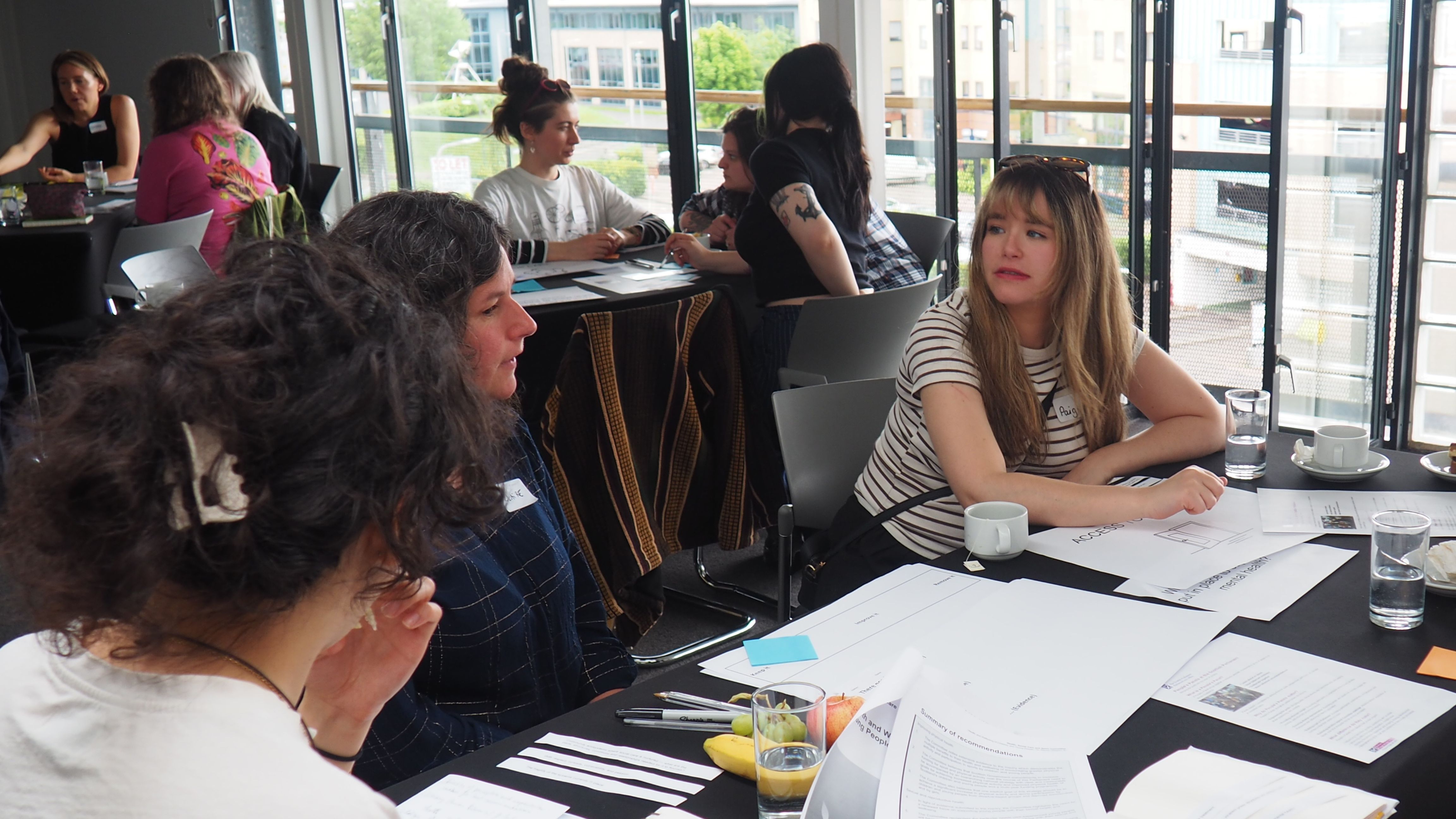
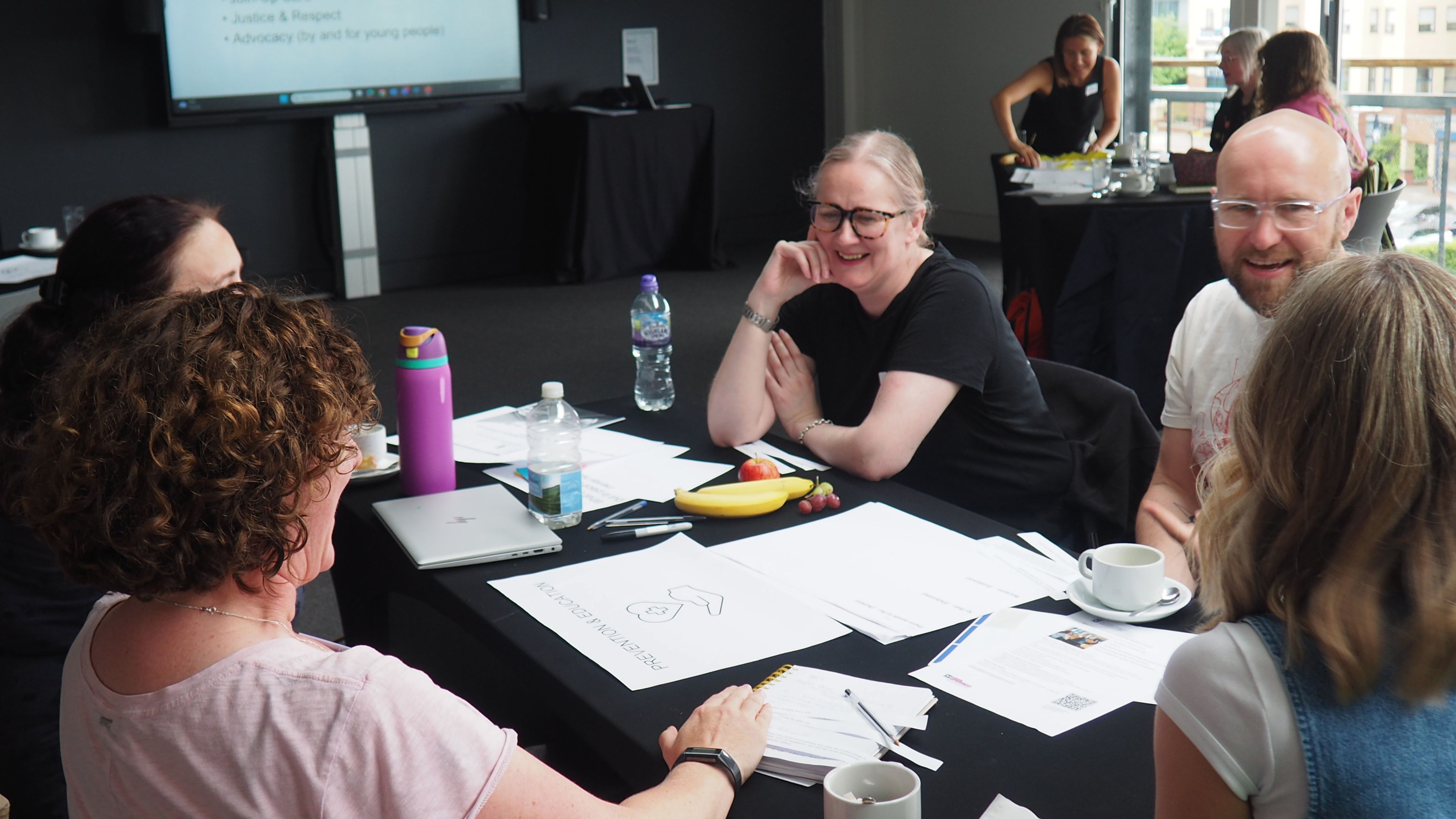
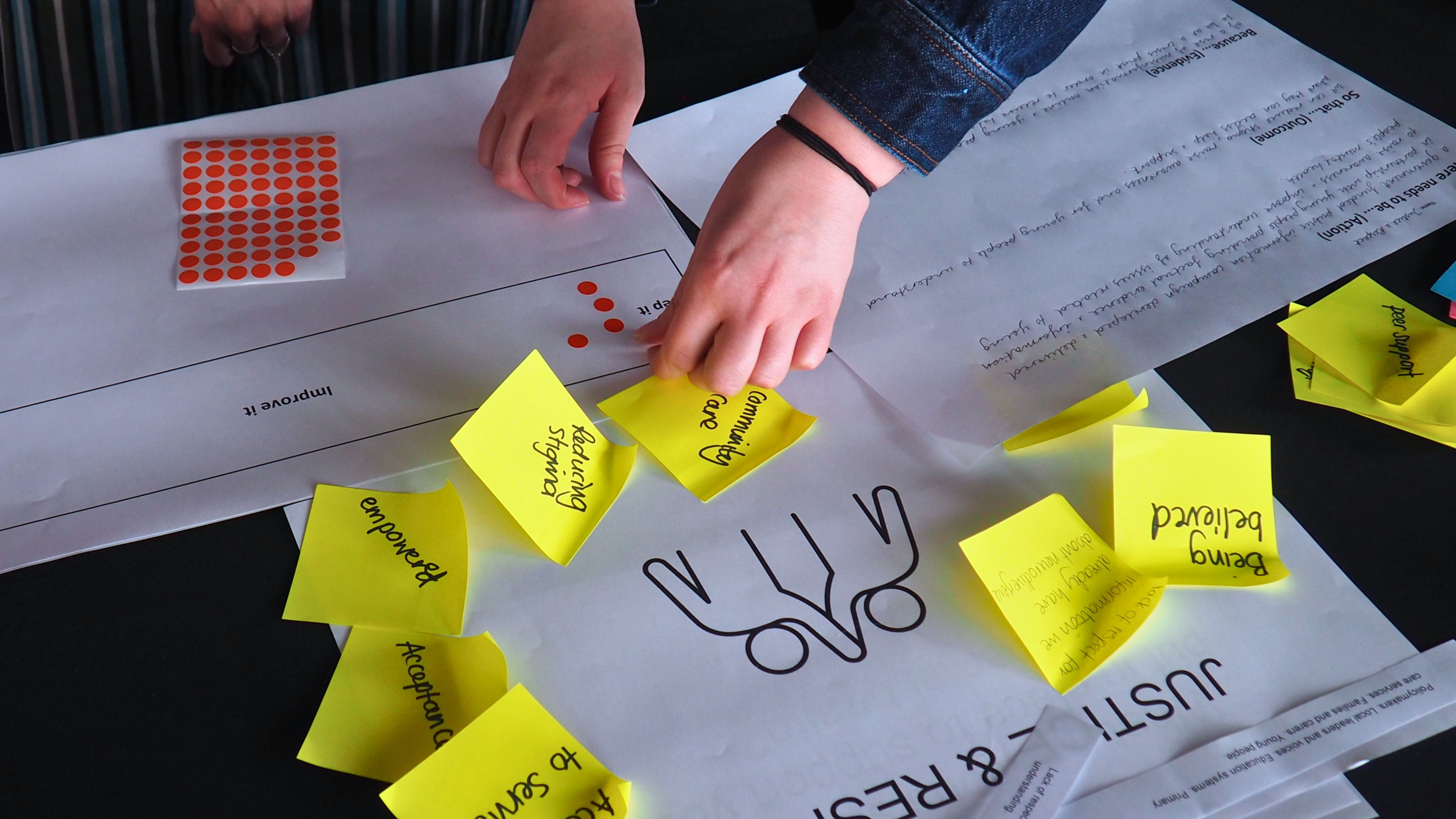
Working on our prompt stirred anxious reflections of my own experiences and those of my loved ones. As a young person who previously lacked access to ‘safe adults’, navigating health & wellbeing services has meant facing dismissiveness, discrimination, and neglect, alone and in a sector crumbling from chronic underfunding.
I’ve leapt through hoops, been blocked from accessing help, and struggled into services only to find they did not have the cultural, historical and systemic understanding to help me. At times reproducing the very systems that cause harm from service providers, with no avenues for accountability or repair. Among my immigrant, trans, QTBIPOC loved ones I find my experiences are not unique, nor the most egregious. My friend once told me that we sense that many of these services are not made with or for us, I find that this describes my sentiment well.
In Dundee, adequate support for QTBIPOC youth does not exist beyond one off, self-funded community-events. Young people must travel beyond the city to find safety and healthcare, to Glasgow or Edinburgh where networks are built by those who need it, thereby absorbing the financial and emotional risks themselves.
We concluded with a range of recommendations which reflected the need for reliable long-term relationships that foster trust – between organisations, service users and providers, such as through organisation liaisons and long-term projects that keep people connected. Pathways to sustainable careers so more people with lived experience can become providers. Community run spaces where money flows back into the community and concrete anti-oppression, decolonial work embedded into community systems, with an increase of reliable and accessible funding. The bottom line being, communities know their needs best. What they need is support and resources to action this.
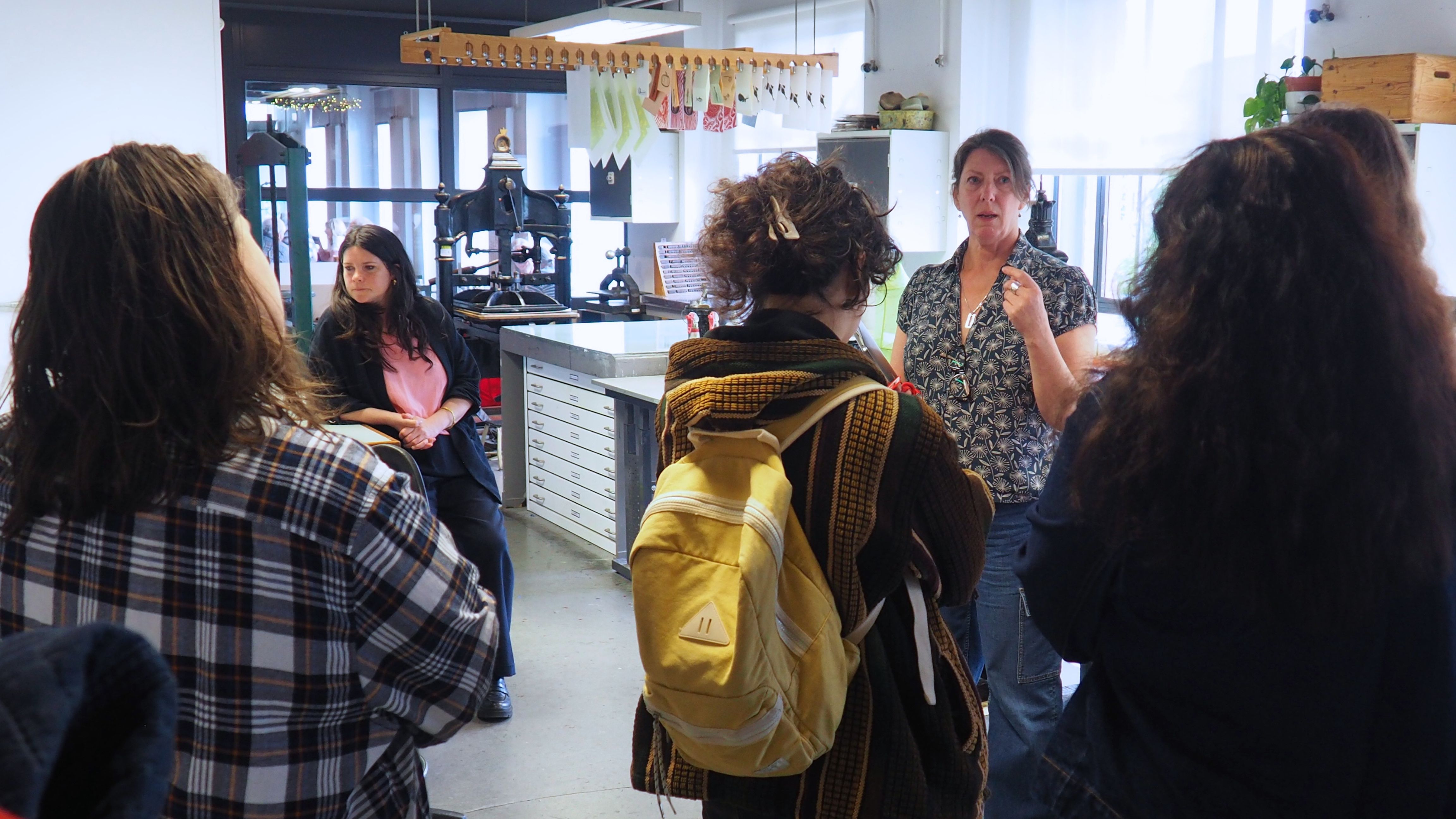
After a full-on morning, we heard from Sarah Derrick, Head of Learning at the DCA. Who gave us a tour of the impressive print studio tucked behind the restaurant. This was a welcome chance to leap into possibilities of mental health care and youth work through the variety of print techniques available. A demonstration of the benefits of haptic play for all ages, and the need for sensory play and connecting with a traditional medium.
Sarah’s reflections on seeing the benefits of print on the young people who have engaged with the studio was a touching and grounding reminder of the significance of youth work in Dundee. She described the confidence that springs out from a young person when discovering print making, and the artist collectives young people formed with each other in the studio pre-covid. An ideal vision for the DCA if funding was not a limit, Sarah shared with us, is a youth run building with a decentralising of crucial creative spaces from the centre through studios in all areas of Dundee.
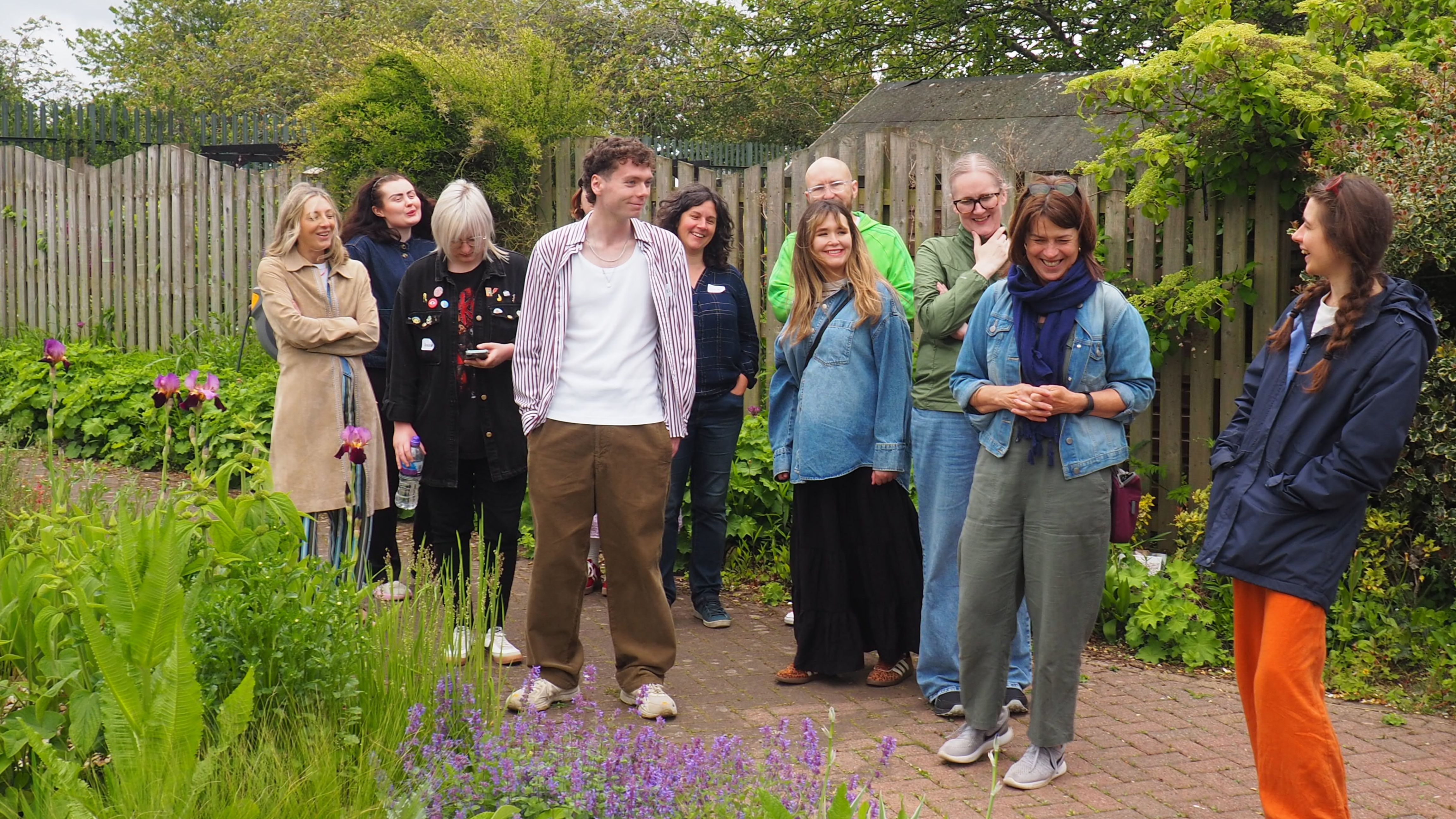
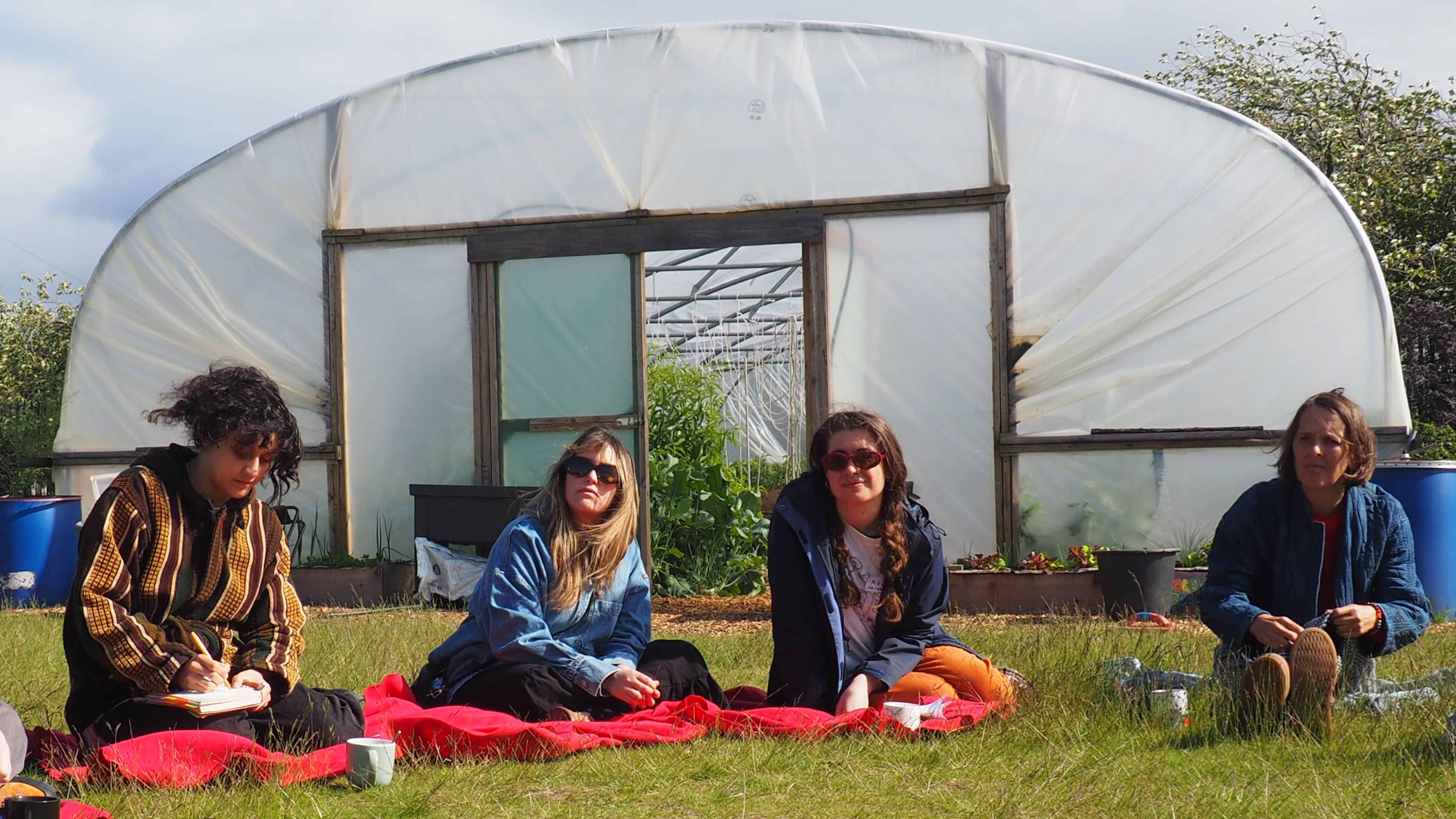
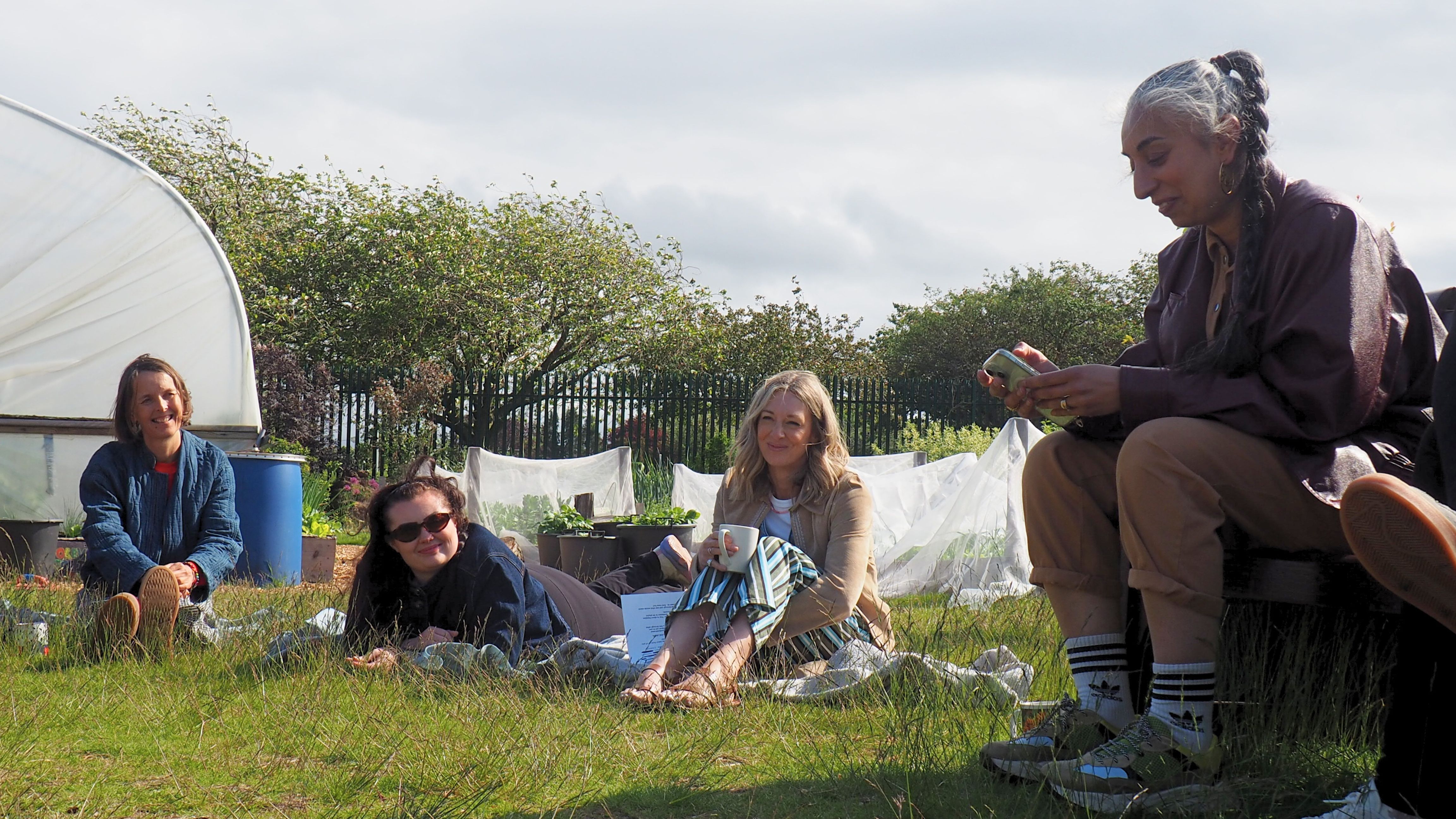
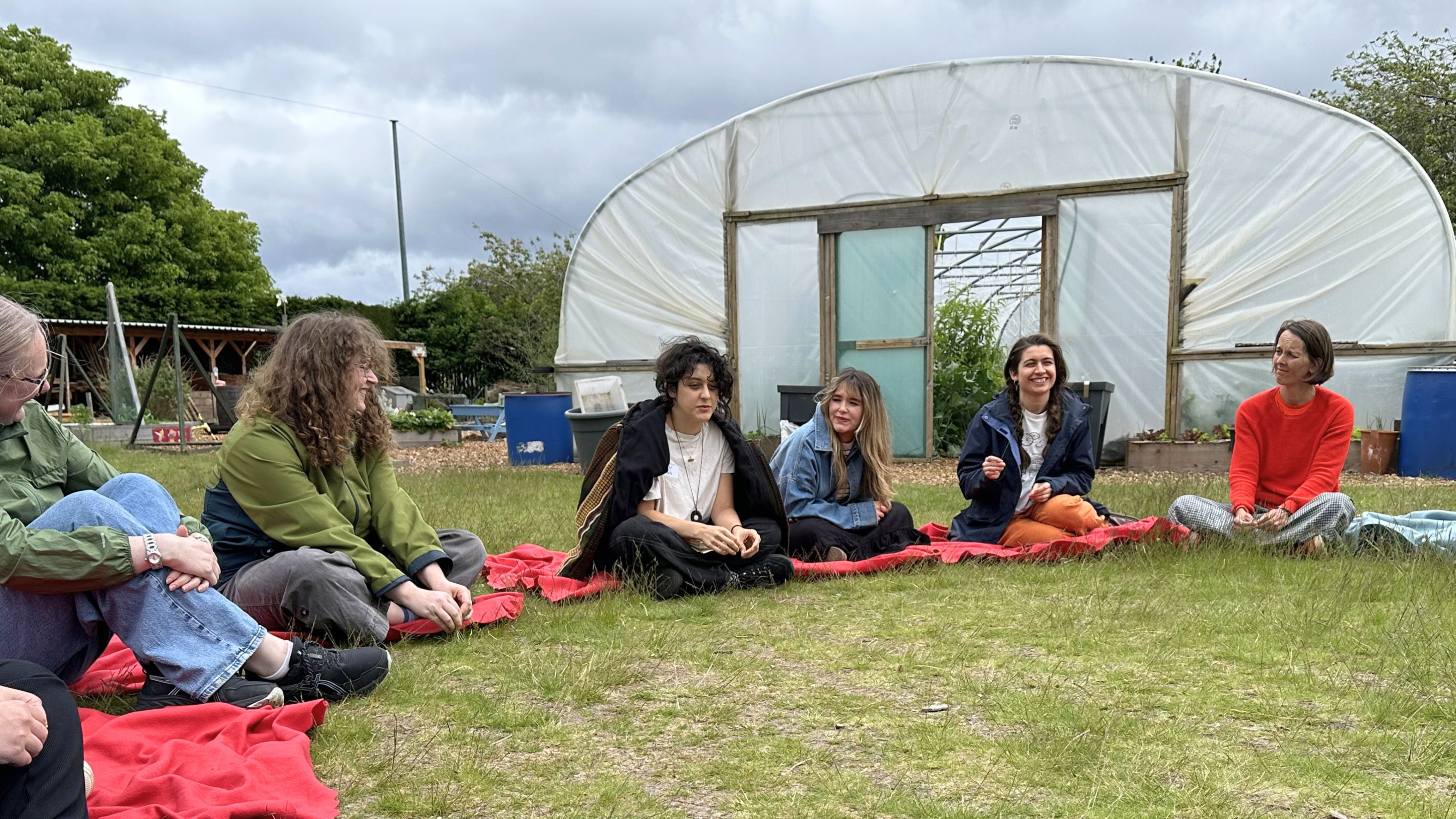
After the tour and a short bus drive, we were welcomed with another change of pace at the bowling green turned community garden, settled between three communities in Dawson Park. A surprisingly quiet slice of calm considering the chaos of sports day just down the path.
We received a tour of SAMH mental health project Growing Chrysalis from Su Black, which provides therapeutic programmes. These programmes encourage leadership, initiative and learning with the garden shaped by those who engage with it. Growing Chrysalis started in 2021 as a project with a limited scope, but it expanded further because the volunteers believed in it and pushed for it, subsequently earning the project more funding.
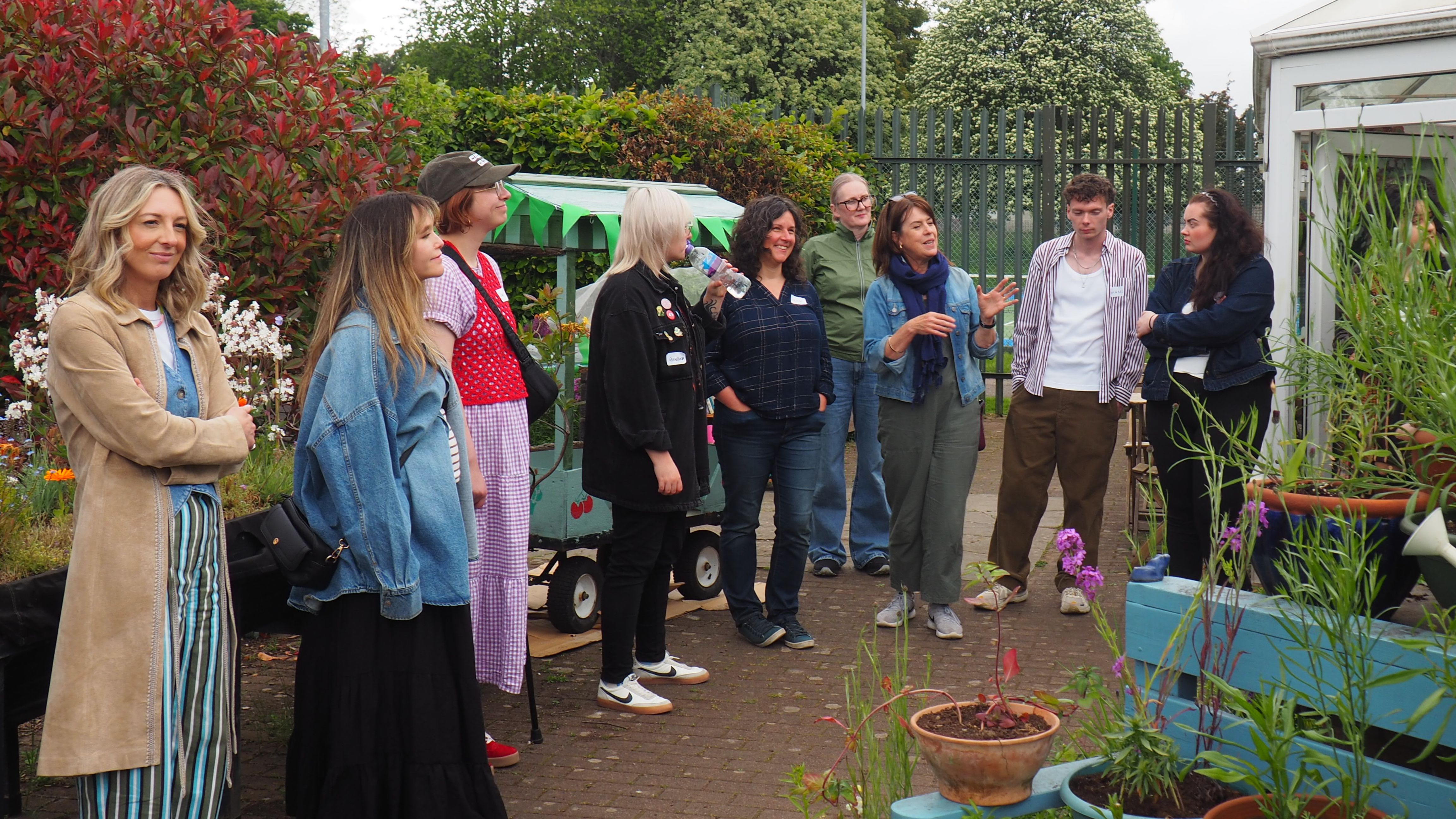
The garden has an impressive amalgamation of projects growing food and flowers, including climate informed gardening and working to increase native biodiversity, herb gardens, ponds, moon gardens, and a fairy forest complete with a live beehive. Each aspect was curated to work interdependently with local communities and city-wide initiatives such as Transition Dundee. Trust, I will be telling all my friends about this place.
Su shared with us a story of a local turned volunteer who came to the garden after a life altering medical emergency left her struggling with her mental health. She created a system to sell plants to bring in more income. Once a volunteer, she created and led the project ‘Cocoon’, a space tailored to accommodate her mobility needs. With Cocoon, the garden became more accessible to others.
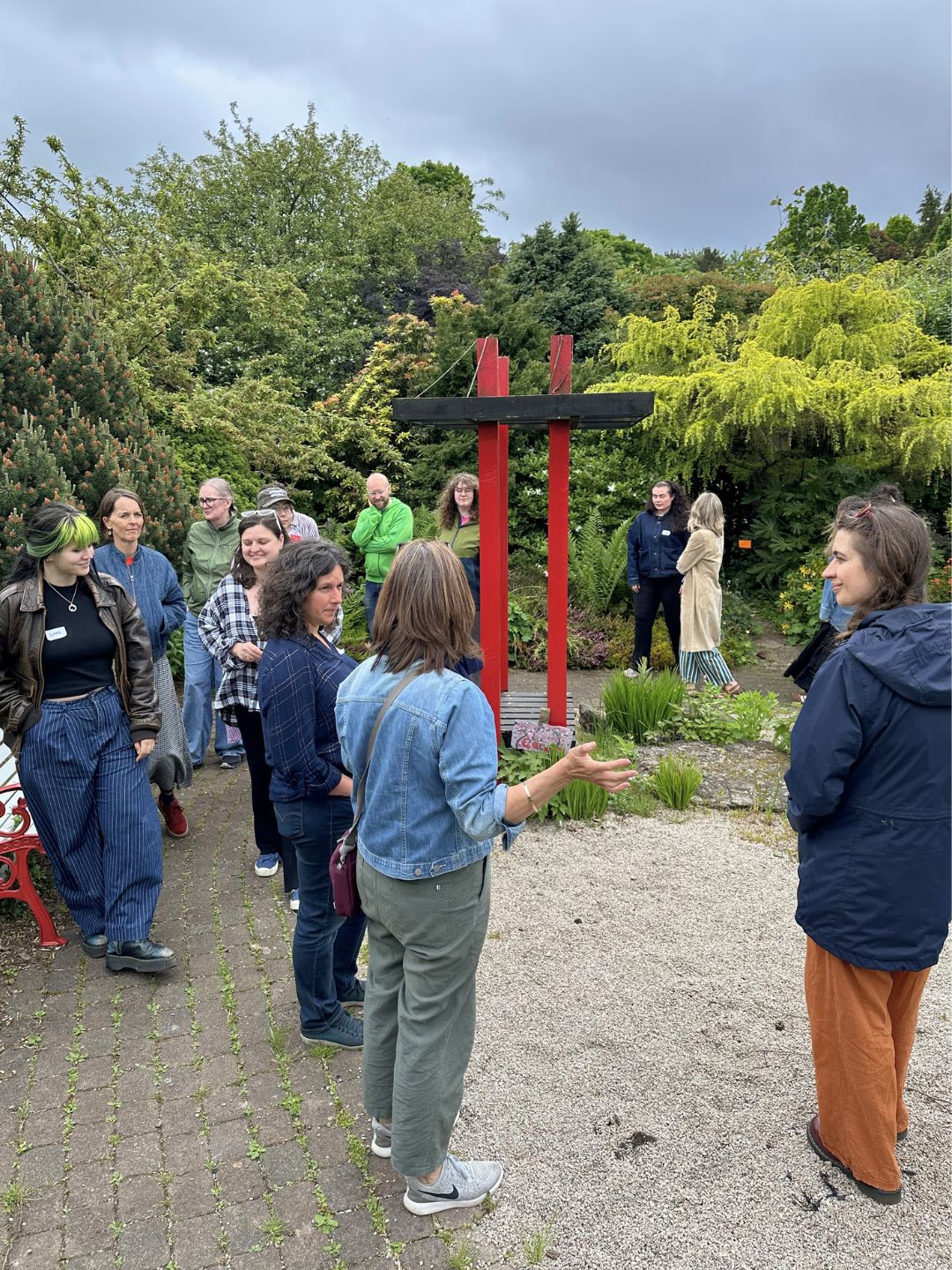
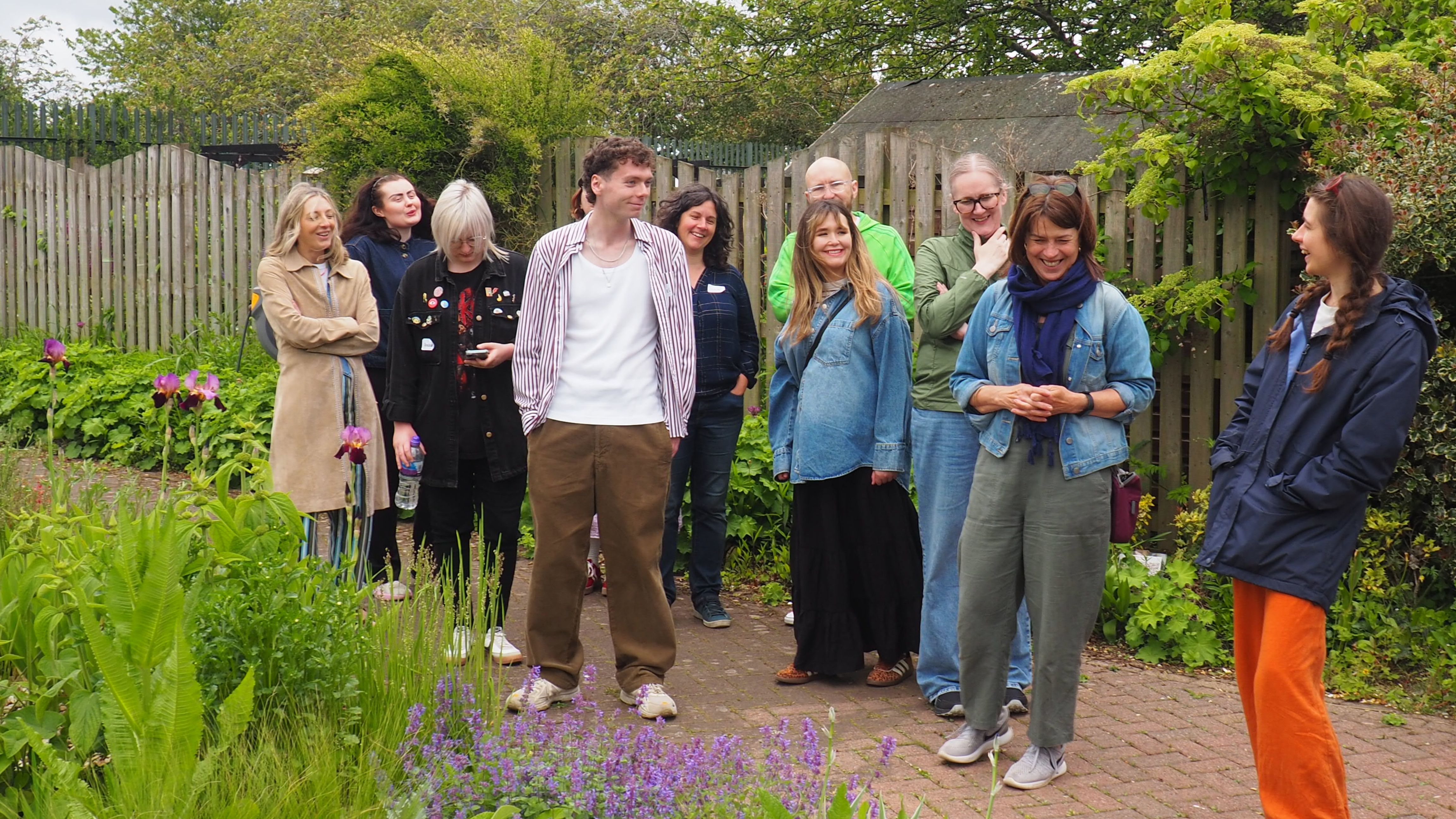
We gathered in an open green area with a play park. I reflected on our infrastructure’s hostility towards young families. It was so refreshing to see kid centric environments being integrated. The weather and gentle breeze slowed us down; we settled in a circle where we had a final workshop facilitated by Ravideep Kaur, speaker, facilitator and poet specialising in somatics with anti-oppression, decolonial frameworks.
For a moment I was unsettled by the return to my body. When I enter majority white, cis het spaces, I know there will be a mental load. Navigating the dynamics because of the identities imposed on me, out of safety. Holding histories in an environment that doesn’t reflect my understanding of the world is dislocating, and registers physically afterwards. Slowing down forced an acknowledgement of the weight on my chest.
I appreciated having another person in this space who understood what that felt like without having to explain this and is committed to collective liberation.
Ravideep’s black out poetry workshop was an exercise in ‘freedom and flow;’ to allow ourselves to exist without editing. We were given print outs with words selected from the past few days, and we selected words that spoke to us on our first read through. Having the words printed out for us helped override overthinking with presence. Can’t lie, I found it challenging but something I want to continue practicing. It felt kind and necessary to allow our creativity to exist as it comes.
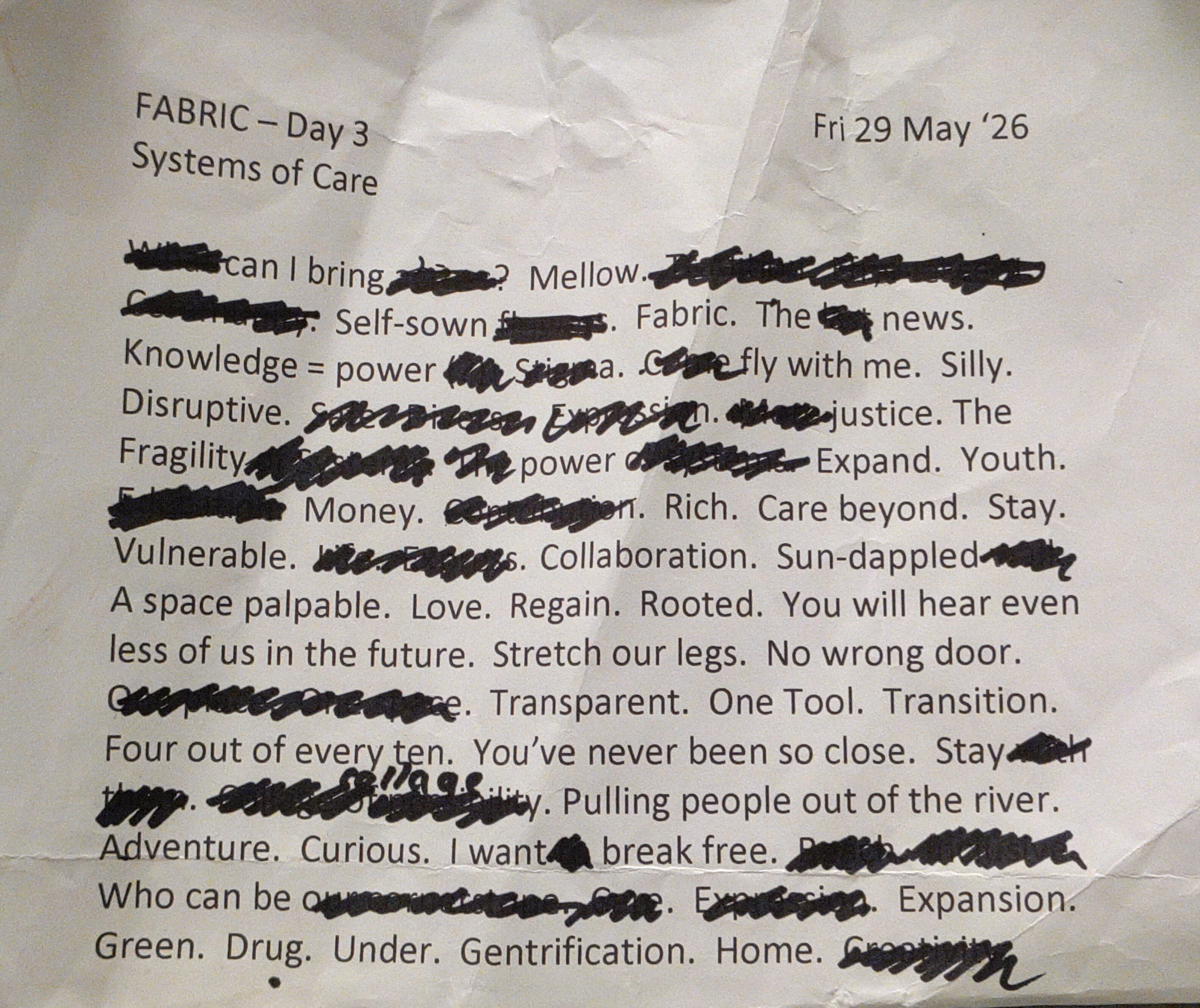
Ravideep shared her poems. Hearing her relationship with poetry and nature helped me to reflect on the practice of expression with no end goal. To ground ourselves in our environment and acknowledge how we are impacted by the interpersonal and global is a compassionate act, something we deserve to feel in a world that wants us disconnected from ourselves. She explained in poetry there’s a freedom in not needing to translate, yet the reader and writer will still find a way to connect.
Sharing our poems opened us to reflection of our inner and outer worlds. How we think and feel. Which turned into discussions of how young people were coping and their agency in processing a chaotic world. We shared reflections on perfectionism, double perception, performance, care for ourselves and others, and grief. The conversations between us continued to evolve in that settled space but the bus had come for us, and it was time to leave.
Stepping off the bus for a final time, Day 3 of our Fabric journey had settled as wonderfully memorable. Marked by conversations, observations, exploring spaces that felt so alive, and learning from incredible people that work hard to keep community breathing. It’s special to see people building a care-led future in Dundee. I left grateful, looking forward to our next day together, and ready for a nap.
Sofía/Teyo Calmeiro-Arguello is a 2nd year art & philosophy student organiser at DJCAD and young person of colour from Dundee, seeking to develop their understanding of how art can effectively sustain us and benefit our communities – a practice they’re learning from working-class, QTBIPOC writers, organisers and world-makers. They believe when we have been dehumanised, creating a space that allows us to humanise each other is incredibly powerful. It is a power that can sustain the building of a liberated world and healthy planet, which is so important for our wellbeing and future.
Fabric is led by Creative Dundee, and delivered in partnership with healthcare, community and creative organisations, with support from the Participation and Communities Team at The Scottish Parliament, as part of Creative Minds – a creative youth mental health project designed by Creative Dundee with project funding from NHS Tayside Charitable Foundation and The Northwood Charitable Trust.
Read the other blogs from across this Fabric journey: Day 1, Day 2, Day 4.

If you would like to support us in creating even better content, please consider joining or supporting our Amps Community.